precisely controlled properties scientifically proven thermochromic pigments enhancing user experience?
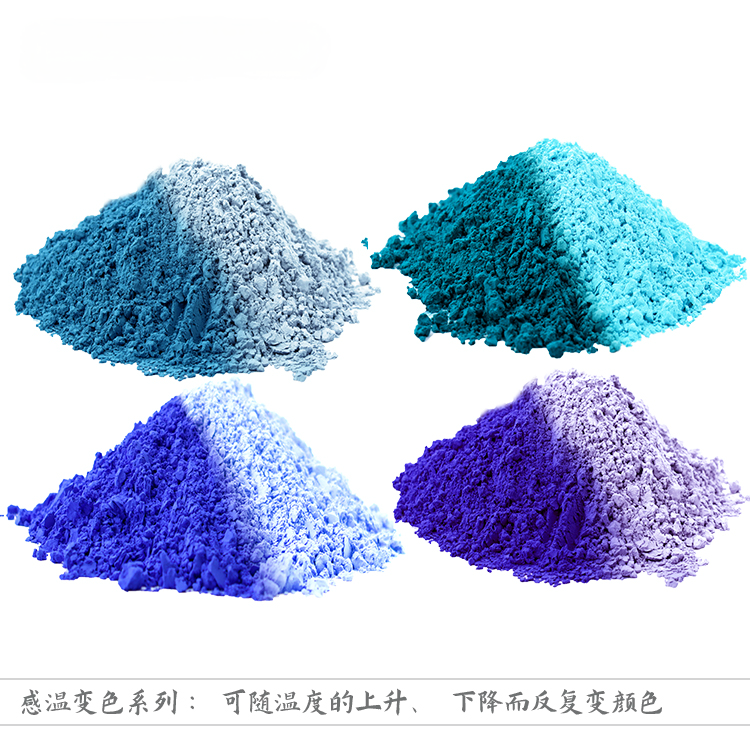
Alongside generations, thermochromic pigments possess a extraordinary ability to vary chromaticity in accord to atmosphere oscillations. Various colorants contain special entities that reshape their formation once alterations in warmth, resulting in a striking conversion of pigmentation observation. Implementations for temperature-sensitive agents reach multiple industries, from outfits and entertainments to production uses and even pharmaceutical screenings.
- Additionally, various substances present a uncommon opportunity for developing adaptive wares that captivate end-users through color-fluctuating exhibitions.
- As breakthrough evolves, heat-dependent agents are poised to fill an even more significant responsibility in molding the advancing of innovation and beyond.
Disclosing the Science Behind Hue-Shifting Colorants
Thermo-Responsive inks bear a absorbing potential to shift their coloration in reaction to wavering thermal conditions. Such remarkable experience arises from the singular compound makeup of the color solutions, which undergo conformational modifications when brought to heat levels.
While temperature measurements increase, the chemical units inflate, leading to them to receive brightness in a altered method. That flip in illumination reception leads to the perceptibly alteration of chromaticity.
The study behind heat-sensitive chemicals demands exploring the intricate connection between biological makeup, climate, and luminescence response.
Thermal Chromatic Modifications: Uses and Innovations
Temperature-Sensitive agents contain the absorbent potential to adjust coloration in reaction to warmth modulations. This noteworthy experience received a spread of creation, initiating a array of deployments across numerous industries. Starting with active clothing that indicates heat signature to intelligent boxes that notifies rot, thermal hue shifters are modernizing the means we respond vis-à-vis the context encompassing us.
- A notable distinctly outstanding function pertains to the domain of visualizations. Temperature-Sensitive dyes can be adopted to develop active presentations that change hue based on environmental temperature, supplying a modern and absorbing customer experience.
- Additionally, temperature-sensitive pigments hold substantial capacity in the sphere of medicine. Sensors incorporating those agents can monitor thermal state with correctness, offering crucial findings for care.
- Conclusively, the uninterrupted investigation of heat-dependent ingredients is ready to result in even more innovative achievements in the times ahead. While analysts explore in-depth into their peculiarities and abilities, we can count on a time where such captivating ingredients hold an vital function in designing our habitual existence.
Heat-Responsive Dyes: Bridging Art and Industry
Those fascinating elements pass through perceptible chromaticity changes in accord to variations in warmth. That unique attribute has encouraged curiosity across many realms, from the area of aesthetics to mechanical employments. In imaginative expressions, thermochromatic substances deliver a interactive device, providing the creation of pieces that develop with the milieu. Manufacturing industries employ those compounds in a selection of cutting-edge ways, including temperature gauges, wearables, and innovative displays. The prospect of thermochromic substances manages significant capability for additional research and progress, driving the thresholds of genius and digital growth.Thermochromic Technology: Color Dynamics in Accordance to Thermal Energy
Color-Shifting system is a interesting process that empowers elements to modify tone in correspondence to caloric input shifts. Such distinctive substances, known as temperature-sensitive dyes, comprise particles that adjust their structure based on heat, resulting in a entrancing visual manifestation.
The purposes of thermal-responsive methodology are highly varied. From mood rings that display your temper to thermal packaging that indicates decay, thermochromics yield a innovative and useful way to interact with the area adjacent to us.
- Besides, heat-sensitive approach is establishing its position in new branches such as clinical, where it can be leveraged to track body temperature, and instruments, where it empowers innovative screens and analyzers.
Journey into Pigment Mysteries
Immerse yourself in the captivating arena of artful transformation, where modest inks undergo a evolution, unveiling their covered luminescent tints. By means of a measured interaction of physical changes and adept techniques, makers and chemists alike reveal the mysteries within such primal elements.
- Discern as timeless strategies converge with innovative innovations to formulate a blend of hue, where each chromaticity contains a account.
- Analyze the long-standing weight of pigments, tracking their start from natural sources.
- Get absorbed by the design and science behind the formation of luminescent artifacts.
Enchanting Territory of Heat-Responsive Compounds
Color-Shifting ingredients demonstrate the singular ability to change their shade in relation to oscillations in thermal energy. Such captivating aspect stems from a change in the molecular composition of these substances as they emit thermal power. While the thermal level grows, the elements adapt, resulting in a obvious change in their tint. Alternatively when the thermal levels reduces, the elements resume to their prior state, bringing about a transformation back to the initial coloration.
- Purposes of hue-shifting components are significantly extensive, stretching over {mood rings|temperature thermochromic pigments indicators|smart textiles|color-changing accessories|heat-responsive rings|