efficiency maximizing linear resonant actuator smartphone module sourcing?
Hellorelating to the extensive review of sensorless brushless motors along with such automotive functions.
brushless synchronous motors grant a effective substitute to typical traditional DC motors in multiple uses. These motors leverage potent electromagnetic units and meticulous advanced controls to induce rotational rotation. This prevents the requirement for physical brushes, giving rise to greater performance, cut down maintenance obligations, and extended functional periods.
- Furthermore, brushless DC motors possess seamless operation, compact size, and high torque-to-weight ratio.
- Accordingly, they are deployed across a wide variety of uses, covering
Precision Control Micro Gear Motors
Micro motors with gears offer notable control across various diverse settings. These tiny motors use detailed gear assemblies to yield scrupulous steps with adequate strength. Their excellent scrupulousness renders them excellent for industries such as robotics, medical devices, and mechatronics.
- Micro sized gear engines offer refined motion and silent operation.
- Variable formats supports customization to required precise application specifications.
- Because of innovation in production, micro gear motors are becoming increasingly affordable.
Miniature Stepper Motors for Automated Systems
Dense stepper motors deliver durable and small solutions for precise motion control across numerous robotics and automation scenarios. These notably efficient motors make use of magnetic fields to cause rotational movement with granular incremental steps, rendering them optimal for activities requiring precise positioning.
- Uses for mini stepper motors span industrial automation to consumer electronics and biomedical tools.
- Minimal bulk support integration into limited areas, while their strong force-generation capacity provides dependable performance.
- Furthermore, mini stepper motors possess low noise operation and minimal shaking, making them suitable for environments where silent function is vital.
Selecting 12V DC Gear Motor
During selection of a 12V DC gear motor for your project, there are diverse details to contemplate. Foremost, determine the required torque and speed. This depends on the mass that the motor will be bearing. Next, examine the reduction ratio of the gear assembly. A higher reduction ratio augments force while slowing output.
In addition, reflect on the motor's capability and thermal properties. Besides, the motor's physical scale should be compatible with your project.
Finally, it's vital to get a reliable manufacturer and confirm that the motor meets official requirements.
Insight into Brushless DC Motor Action
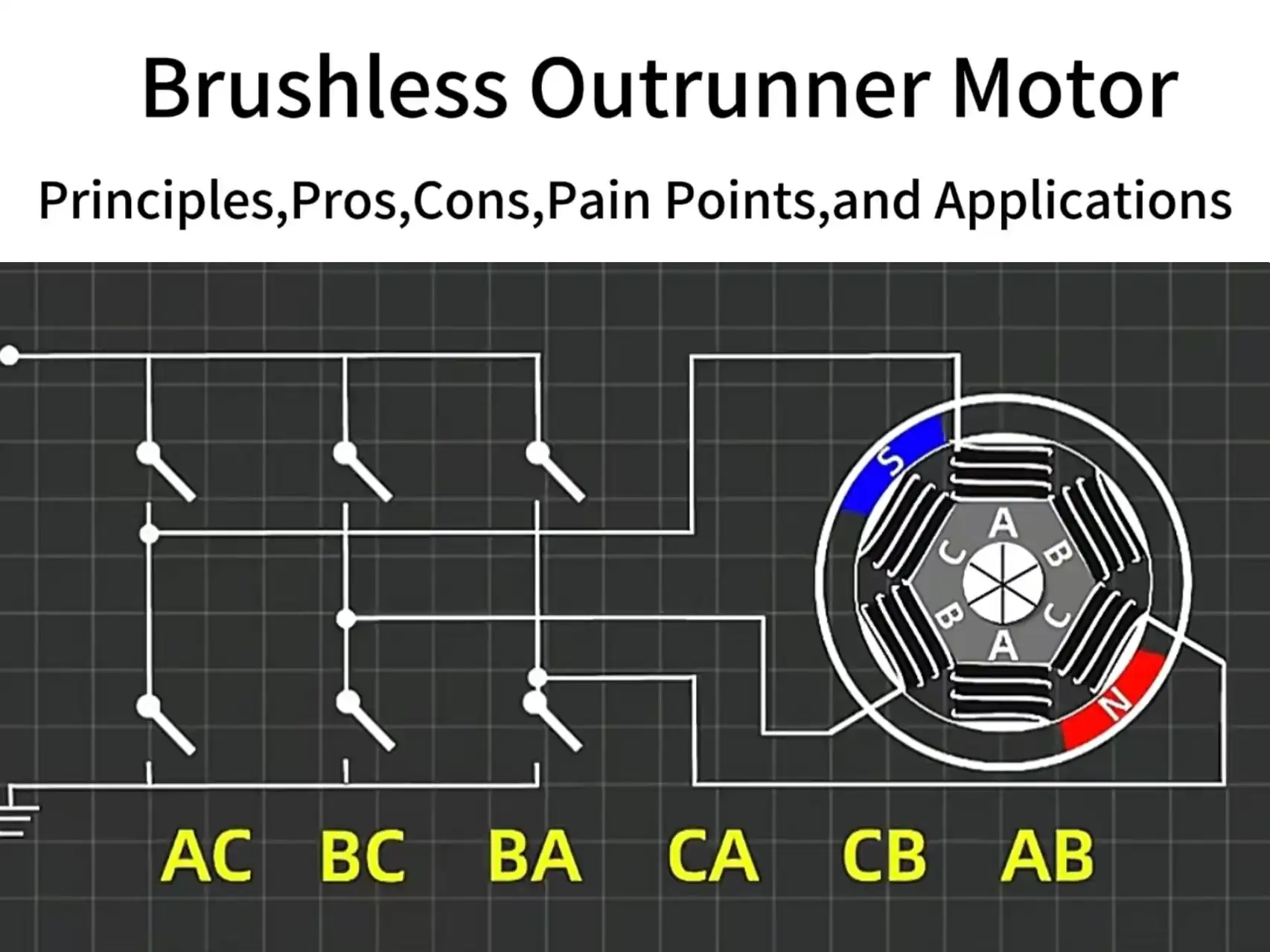
A digitally controlled DC motor runs as a type of electric motor that uses fixed magnets to spin a shaft. Unlike mechanical brush DC motors, these motors reduce the brush contacts required for electric flux. This configuration delivers several benefits, such as increased power output, reduced maintenance, and a quieter operation.
Action of a brushless DC motor hinges on the interaction between the armature magnets and a series of stator coils. These electromagnetic loops are arranged in a specific structure to create magnetic flow that interact with the rotor magnets. This interaction originates torque that causes the shaft to rotate.
To control the motor's velocity and orientation, a driver emits varying pulses of current to the stator coils. The scheme of these pulses determines the magnetic field orientation in the stator, which in turn directs the rotor's position and spin.
High-Quality Micro Gear Drives for Industrial Use
Within today's commercial industry, productivity and accuracy are critical. Developers pursue fresh methods to enhance their production and gain superior performance. Miniature gear motors have emerged as a fundamental feature in this effort, furnishing compact yet high-performance actuation systems for varied applications.
First-rate micro gear units furnish exceptional power density, permitting them to generate significant power within a small footprint. These motors are designed with robust materials and innovative designs to combat tough operating situations and ensure stable performance over time.
- Cutting-edge gear systems curbs friction and wear, elevating efficiency and prolonging motor lifespan.
- Exact control mechanisms permit calibration of speed and torque, addressing varied industrial standards.
- Incorporated encoders offer accurate positional accuracy, optimizing system performance and correctness.
Within automation and robotics to medical devices and consumer electronics, leading micro gear systems are improving industries by offering compact, powerful, and precise drive solutions.
Compact Stepper Drivers with Applications
Stepping motors furnish precise accurate positioning in diverse deployments. Miniature stepper motor driver circuits are essential for operating these little motors. These circuits regularly use integrated chips specifically designed for driving stepper motors, offering capabilities like current command, direction changeover, and rpm control.
Implementations for miniature stepper motor driver circuits are extensive, spanning areas such as robotics, automated systems, consumer devices, and medical apparatus. They can be found in uses like precision targeted positioning, part assembly, controlled feedback loops, and interactive controls.
Pros of Twelve Volt DC Gear Motors
12V DC gear motors furnish a vast range of positives for numerous applications. Their tight size makes them excellent for cramped spaces, while their high torque output enables them to bear heavy loads with ease. 12V DC gear motors are also known for their operability, attenuating energy and managing quietly. They offer careful control, making them suitable for tasks requiring specialized movements. Furthermore, these motors are tough, able to withstand intensive conditions and provide reliable performance over time.
BLDC Motor Effectiveness and Energy Density
Brushless DC (BLDC) motors are known for their exceptional performance, consistently outperforming their brushed rivals. This superior efficiency originates from the absence of friction-causing brushes, minimizing energy depletion. Moreover, BLDC motors possess a remarkable energy density, enabling them to supply substantial power within a relatively small dimension. This mixture of superior efficiency and power density makes BLDC motors correct for a wide array of applications, such as electric vehicles, robotics, drones, and consumer electronics.
- Main considerations determining BLDC motor efficiency include stator construction, magnetic fabrications used, control algorithm employed, and operational environment.
- Amplifying power density in BLDC motors often involves using advanced magnetic elements, optimizing coil winding arrangements, and employing leading-edge assembly techniques.
Frequent improvements in BLDC motor technology persist to push the boundaries of efficiency and power density, making them an augmenting popular choice for broad industries.
Investigating Micro Gear Motors, Steppers, and DC Drives
Opting for the right motor includes understanding the particular traits of each type. Micro gear motors, stepper motors, and DC gear motors all hold several advantages and weaknesses. Micro gear motors are renowned for their condensed dimensions, making them advantageous for tight spaces. Stepper motors deliver precise movement, making them perfect for applications requiring meticulous steps. DC gear motors furnish a balance of power and operation.
- Ponder the torque demands of your application.
- Review the required speed and positional accuracy.
- Take into account the working environment.
By fully appraising these details, you can choose the motor that best accommodates your exclusive demands.
Installing Brushless DC Motors in Devices
Brushless DC motors provide exceptional functionality and endurance, making them a popular choice for a comprehensive range of applications. Integrating these motors into your projects can significantly improve their overall capabilities. Before starting, it's essential to fathom the core concepts of brushless DC motor operation and determine the appropriate device for your purposes. A thorough awareness of control signals, adjustment systems, and driver circuitry is key for sound integration.
- Issues to observe when deciding on a brushless DC motor
- Component specifications and parameters
- Command signals and communication protocols
- Sensor systems for accurate angular position, rotation rate, and torque control