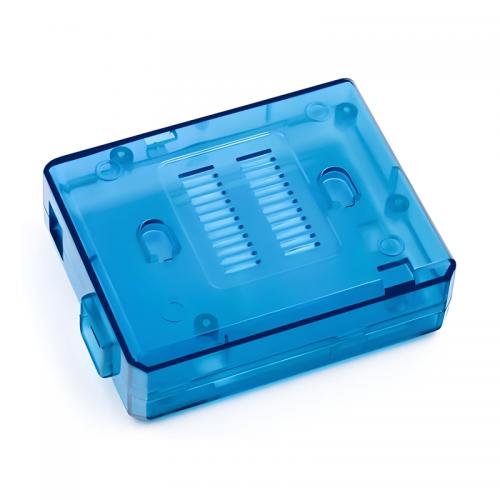
advanced material shaping dynamic CNC component production?
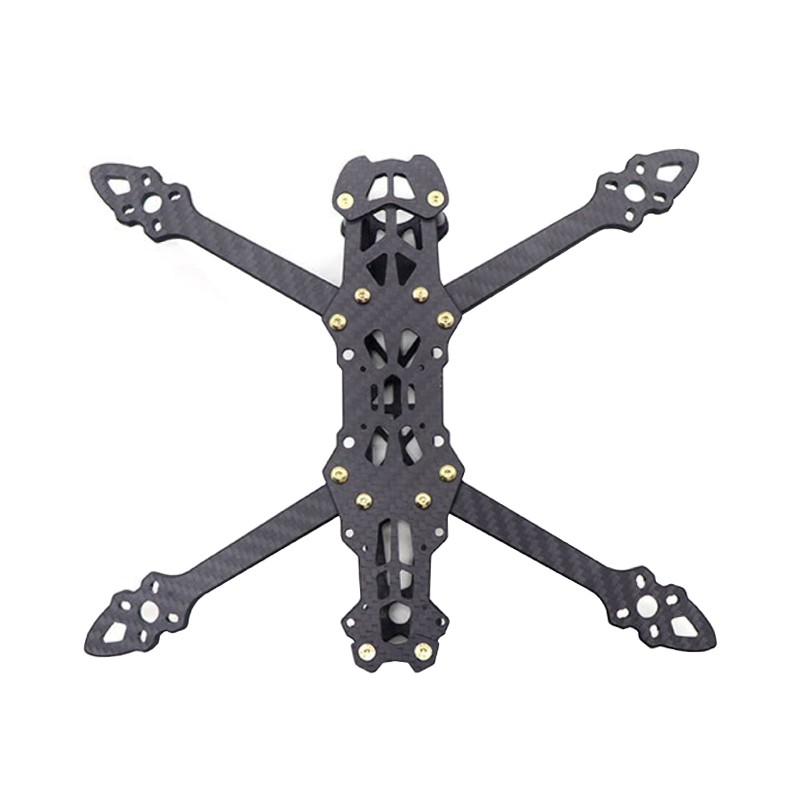
Across the competitive landscape of robotic aircraft fabrication where density and output reign, high-accuracy machine tool operation is regarded as pivotal. Automated milling devices expertly craft detailed fragments employing multiple resources including lightweight metals, strong metallic compounds, and polymer strands. Those assemblies, including minimalist skeletons and spinning mechanisms to precise microcontroller housings, call for remarkable correctness and dependability.
The benefits of precision CNC machining are manifold for drone construction. It fosters development of light-scale modules curtailing overall machine weight, increasing flight output. Furthermore, rigorous sizing management secures perfect fitting of elements, producing superior aerodynamic flow and balance. In view of its expertise in complex schemes and precise parameter adherence, CNC allows builders to expand inventive UAV capabilities, advancing state-of-the-art autonomous flight device development.
Immediate Design Trials Using CNC in Automated Systems
In the dynamic realm of robotics, where innovation thrives and precision reigns supreme, rapid prototyping has emerged as an indispensable tool. Computer Numerical Control (CNC) machining, with its capability to fabricate intricate components from a variety of materials, empowers roboticists to swiftly translate conceptual designs into tangible prototypes. The natural versatility of CNC authorizes builders to swiftly alter and optimize blueprints methodically, including necessary remarks amidst the generation progress.
- Starting with featherweight alloys suited for nimble automatons to sturdy metals fit for demanding tasks, CNC manages numerous substrates
- Leading-edge schematic software effectively merges with programmed machinery, allowing construction of highly refined representations
- This repeated model framework significantly curtails creation intervals and budgets, enabling robotics makers to distribute revolutionary mechanized products earlier
Precision Fabrication of Robot Elements via CNC
The fabrication field witnesses an extraordinary shift prompted by embracing cutting-edge tools. Among these, Computer Numerical Control machining has emerged as a powerful force in producing high-precision robot parts with exceptional speed and accuracy. Digitally operated milling devices apply computer drawings to conduct intricate etching trajectories on assorted materials, spanning both metallic and nonmetallic substances. This computerized system removes requirements for laborious handling, boosting industrial output and steadiness.
Utilizing CNC technology, producers are capable of constructing elaborate machine units featuring sophisticated shapes and narrow allowances. The accuracy inherent in CNC systems permits manufacturing parts that comply with strict criteria of present-day automation uses. The talent involves a comprehensive set of mechanism parts, such as appendages, sensors, shells, and regulation panels.
- What’s more, software-guided manufacturing produces valuable advantages in frugal processes
- Via robotization of construction phases, fabricators lower employee charges, raw material spoilage, and turnaround delays
- The flexibility of CNC machines also allows for rapid prototyping and customization, enabling manufacturers to respond quickly to evolving market demands
Precision CNC Engineering for Automated Device Modules
Accurate tooling plays a vital role inside the sphere of high-grade robotic aircraft building. Digitally controlled milling, because of its superior competence in manufacturing elaborate units from heterogeneous matter, influences greatly. CNC expertise allows manufacturers to consistently produce drone components that meet the stringent demands of modern flight systems. Spanning slim but resilient skeletons to detailed detector cases and powerful motor units, numeric control production aids UAV designers in advancing aeronautical innovation.
- Digital cutting’s adjustability facilitates producing multiple robotic aircraft units
- Harnessing innovative software-driven machining suites, architects fashion sophisticated patterns smoothly
- CNC machining offers exceptional repeatability, ensuring high-quality, reliable drone components
Modifiable Machinery Arm Units: CNC Approaches
Algorithmic fabrication delivers adjustable means to assemble exact engineering arm elements. Harnessing digitally managed cutters, creators craft individual modules addressing distinct functional expectations. This range of fine-tuning helps assemble robotic appendages offering enhanced operation, precision, and oversight. Furthermore, automated cutting guarantees premium, robust parts capable of enduring demanding working environments.CNC machining’s ability to produce complex geometries and intricate details makes it ideal for creating robotic arm components like:
- Transducers
- Pivot Points
- Grippers
CNC Machining : Highly Detailed Fabrication for UAVs
{Unmanned Aerial Vehicles (UAVs), commonly known as drones, are increasingly utilized in a wide range of applications, from aerial photography to package delivery|Robotic aerial units, often referred to as drones, find expanding roles across diverse uses including sky imaging and parcel transportation|Autonomous flying machines, typically called UAVs, serve broad functions such as airborne filming and cargo conveyance|Self-directed aerial devices, also known as drones, see growing deployment in varied activities encompassing drone videography and shipment tasks|Remote-controlled flying vehicles, widely known as UAVs, participate in multifaceted purposes ranging from scenic capturing to load delivery|Pilotless air platforms, colloquially regarded as drones, apply to multiple fields from air recording to freight distribution|Unmanned flying platforms, frequently named UAVs, operate across numerous sectors involving aerial scanning and package logistics|Intelligent flight gadgets, commonly recognized as drones, fulfill expanding demands covering airborne cinematography and transport
The effectiveness of these UAV constructs hinges significantly on accuracy and precision of their elements. This is where CNC machining plays a pivotal role. CNC machining offers unmatched control over material removal, enabling the creation of intricate and complex parts with tight tolerances. These meticulous materials provide foundational roles within broad UAV components, covering skeletal supports, dynamic rotors, and electronic containers
The benefits of CNC machining extend beyond just precision. It accommodates superior likeness, favoring large production of corresponding components with few discrepancies. This becomes essential for drone creators needing high volumes of parts to fulfill expanding consumer needs. Furthermore, CNC machining can work with a wide range of materials, including metals, plastics, and composites, providing designers with flexibility in selecting the most suitable material for each application.
As UAV technology continues to evolve, the demand for increasingly sophisticated and lightweight components will only increase. Programmed manufacturing persists as a vital asset facilitating detailed engineering within UAV fields, encouraging breakthroughs and extending flight innovation frontiers
Transitioning Blueprints to Models: CNC in Automated Systems
Across the flexible domain of automated systems, the journey through conceptual drafts to actual samples remains critical. Cybernetic cutting plays a central role in this transformation, empowering fabricators in crafting detailed robotic units with superior precision. Using digitally composed design inputs for control, software-driven dies formulate complex dimensional works from multiple substrates including aluminum, carbon steel and plastics. The adjustable feature allows computerized tooling to construct diverse automation models, covering stationary robotics to mobile units.
- The clarity and regularity of cybernetic shaping aid assembly of detailed mechanized components conforming to robust reliability demands
- CNC machining can be used to fabricate a wide variety of parts, including gears, actuators, chassis, and sensors
- Prototypes created through CNC machining provide valuable insights for testing and refining robot designs
Further, the iterative mode of algorithm-driven carving boosts accelerated mockup production, enabling engineers to quickly redo and improve designs based on assessments
Transforming Robotics via Modern CNC Innovations
The blend of automated mechanisms with advanced software-driven tooling promotes evolution in manufacturing, robotics, and analysis. Computer-guided machining equipment, esteemed for accuracy, help create elaborate device fragments with high precision and durability. This synergy unlocks new possibilities in robotics, from designing lighter and more powerful robots to creating intricate mechanisms for specialized applications
- Further, state-of-the-art algorithmic carving enables mass output of unique cybernetic pieces, shrinking budgets and enhancing project timelines
- Accordingly, union of intelligent machines and algorithm-driven machining ushers novel robotic systems accomplishing sophisticated tasks with unparalleled exactness and performance
{Ultimately, the continued advancement in both robotics and CNC technology promises to transform numerous industries, enhancing productivity, safety, and innovation|In conclusion, ongoing progress within automation and program-controlled fabrication vows to revolutionize several sectors, boosting efficiency, protection, and creativity|Finally, persistent evolution in machine control and automated machining guarantees to reshape multiple fields, improving output, security, and inventiveness|